
Pride
We think pride is one of the most underrated emotions — and maybe the most complex. We unpack it here in Galaxy Q #004 with articles about rainbows, gay codes and resistance fighter Willem Arondéus.
Hey!
This is GALAXY Q #004.
Pride is ... complex. It's got a lot of registers. There's the everyday, psychological sense of feeling good about yourself. Others think it's a deadly sin (something we can absolutely not get behind). There's the pride you feel in others, which frankly, is quite amazing. There's pride as identity. What we're saying is there's tension at the core of pride. At Galaxy, we most often think about pride as dignity: the baseline refusal to be diminished.
And that leads us to the A block, where Justin McLachlan finds a gay resistance fighter's long lost letter and discovers what pride under pressure — even in the face of ultimate sacrifice — looks like.
In the B block, our editors obsess about rainbows and the beautiful, mesmerizing, stunning, unrelenting, brilliant, enigmatic science behind these startling events. YES. We like rainbows, okay? We love rainbows, honestly.
In the Arcade we've got queer greeting cards, queer history and a queer card game that improve any game night by a substantial margin.
Finally, we wrap it all up with a code that magician, escape artist and amateur code-breaker Harry Houdini apparently cracked while stranded in a telegraph office in Kansas, sometime after the turn of the 20th century. Give it a shot. You're all so smart we are expecting a flood of correct answers.
Best, The Editors.
A Letter from Prison, 1943
by Justin McLachlan
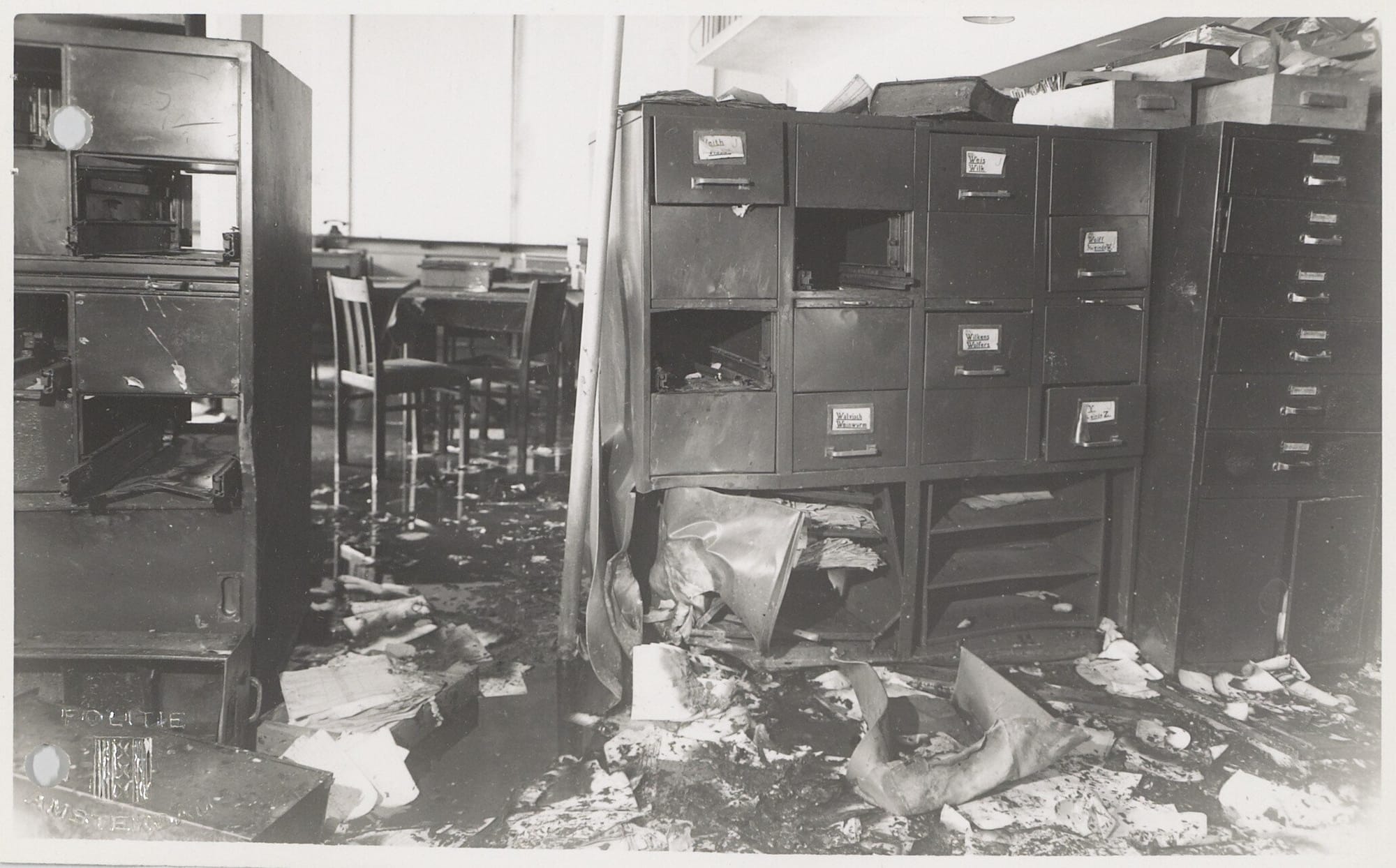
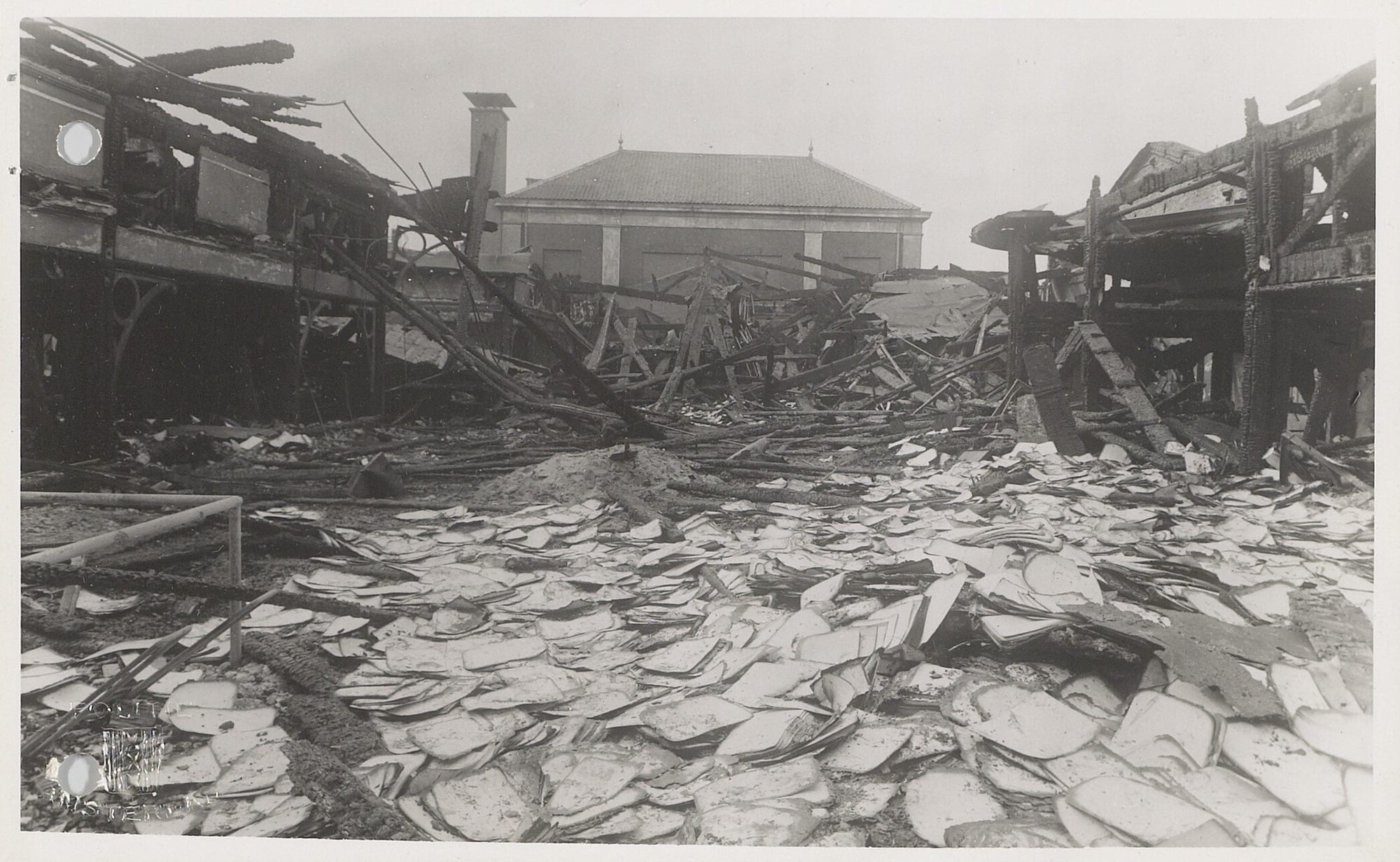
Willem Arondéus was an artist and writer turned Dutch resistance fighter during the Second World War in occupied Amsterdam. He was also gay, out to those who could be trusted (and even some that couldn’t) since he was 17. The Nazis executed him and 12 other men after he led a nighttime bombing on the Dutch population registry, destroying thousands of ID cards the Gestapo used to hunt Jews throughout the city. Today, historians consider the attack one of the most significant acts of the Dutch resistance. Arondéus left the world with inspiring, proud last words: Let it be known that homosexuals are not cowards.
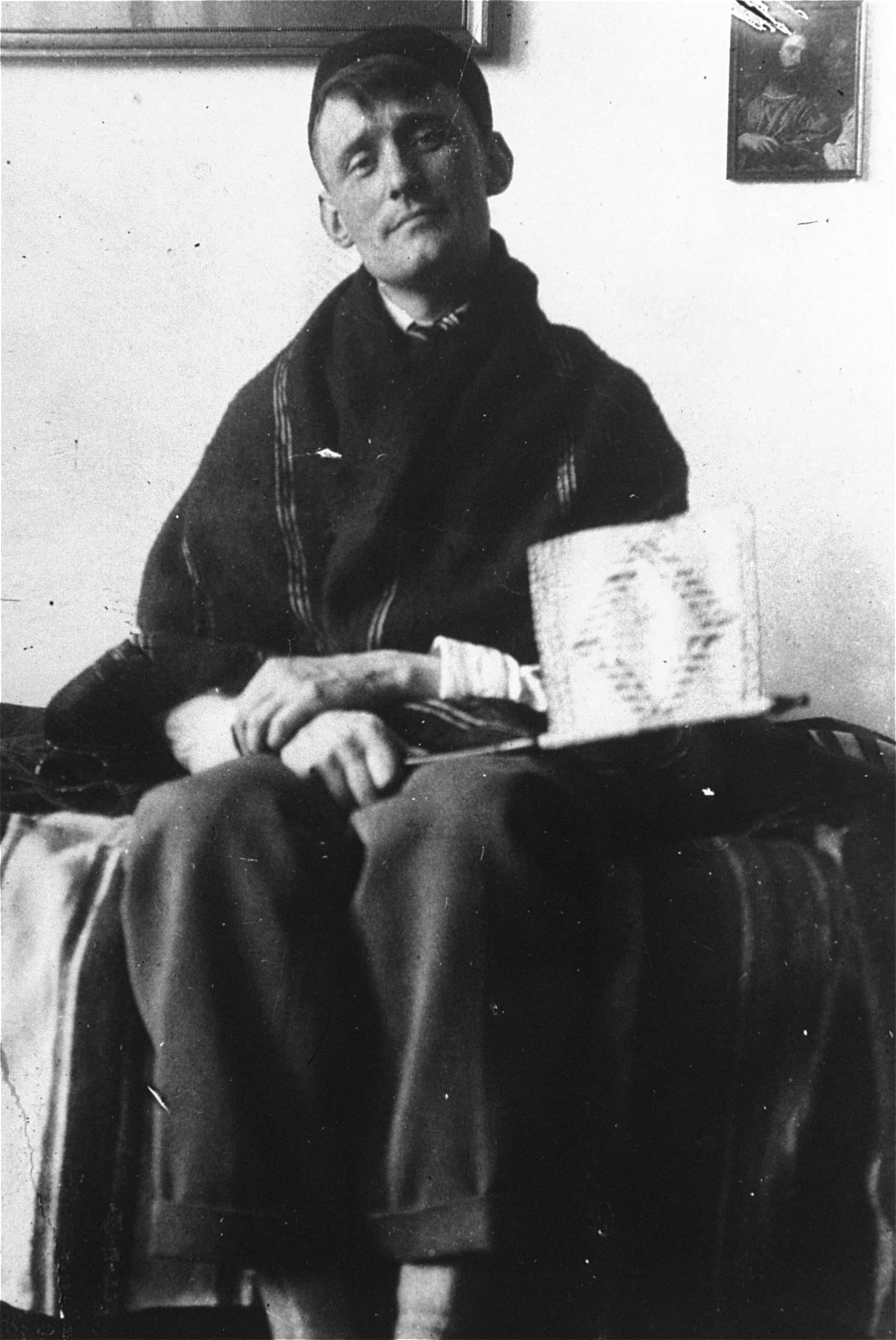
I wanted to know more about Arondéus, but the only English sources I could find about his life were disappointing. They were suspiciously familiar — sometimes even word-for-word copies — as if they were all drawing on some single, unnamed source. I came across an entry in Who’s Who Among Gays & Lesbians in History that mentioned Arondéus’ journals, but when I contacted the author he told me he had never seen them himself. He pointed me to a book in Dutch that he thought might contain excerpts, a decades-old biography titled Het Leven van Willem Arondéus, 1894-1943) — The Life of Willem Arondéus by a famous Dutch choreographer named Rudi Van Dantzig. I found that book and another, shorter book by historian Marco Entrop titled Onbekwaam in het compromis — Unable to Compromise — in a rare bookstore in Rotterdam.
“It is clear, you really want the books!” the seller wrote to me after much back and forth, in what I now understand to be slightly bemused Dutch. The price to ship them to California was more than double what he was charging for the books themselves. He wanted, in typical Dutch fashion, to know if I was just crazy or stupid. Accepting that it was the latter, and after a banking snafu that forced us to resort to a Western Union Moneygram (this is how I learned what slightly exasperated Dutch looks like), he shipped them as soon as the payment cleared. They arrived in Los Angeles and promptly sat waiting in customs for the next six weeks.
When I was finally able to read the books — and read is doing a lot of heavy lifting here, at the time my Dutch was nascent — Van Dantzig relied heavily on letters Arondéus wrote throughout is life, even ones from prison awaiting execution. One of those letters, to Eep Roland Hurst, a long-time friend, stood out. Van Dantzig quotes it in his book in its entirety:
27 juni ’43, ’s middags, 3 uur
Beste Eep,
Waneer je deze brief krijgt, is voor ons alles voorbij; morgen ochtend vroeg worden wij gefusilleerd.
Wij gaan zonder vrees, alle kameraden hebben mij op handslag beloofd rechtop en zonder angst te sterven en ik weet dat zij jun woord zullen houden. Ze zijn zo sterk en moedig: een diep gevoel van trots en dankbaarheid vervult mij als ik aan hen denk, aan hun vriendschap en moed. Wij Danke je voor je brieven en je taarten. Het maakte ons allen gelukkig te weten hoe jullie om ons allen bewogen was.
Groet alle vrienden van mij, in het bijzonder Jany; groet allen met wi ik eenmaal verbonden was, want aan allen denk ik nu met liefde enzonder enige wrok of bitterheid. Ik wist niet dat de dood zoo licht en schoon kon zijn. En zoo wijs.
Vaarwel Eep. Gedenk mij in vriendschap.
je Tiky
Tiky was Arondéus’ nickname among friends. The letter, in English:
June 27, 1943, 3 o’clock in the afternoon
Dear Eep,
When you receive this letter, everything will be over for us; early tomorrow morning we will be executed.
We will go without fear. All our comrades have promised me by handshake to die upright and without fear, and I know they will keep their word. They are so strong and courageous: a deep sense of pride and gratitude fills me when I think of them, of their friendship and courage. We thank you for your letters and your cakes. It made us all happy to know how much you cared for us all.
Greet all my friends, especially Jany; greet everyone with whom I was once connected, for I now think them all with love and without any resentment or bitterness. I didn't know that death could be so light and beautiful. And so wise.
Farewell, Eep. Remember me in friendship.
Yours, Tiky.
Arondéus begins the declaration that by the time it’s received, he will have been shot dead. His compatriots have promised that they will all go with their heads held high, and he is proud — proud — of how they’ve faced their fate. He tells Eep how thankful he’s been for the friends who’ve loved and supported him along the way, and that he never knew that death could be so light and beautiful — and wise. This was a man finally and fully unconstrained. His own sense of completion is palpable.
Much later, I found another book, a journal published decades after the war by a witness to Arondéus and his co-defendants’ show trial, someone who calls himself Yvo Pannekoek. Though the book was published in the 80s, the author still chose a pseudonym (pannekoek means pan cake in Dutch). Pannekoek refers to Arondéus as A in his account:
A., een beetje verstrooid lijkt het en ontzettend slecht Duits pratend, beide opzettelijk? Hier herinner ik me weinig van: ik geloof dat de voorzitter van de rechtbank niet veel vragen heeft gesteld, zich bepaald heeft tot de levensloop en de verhouding tot Duitsland. ‘Ich have een groszes Teil Meiner Bildung Deutschalnd zu verdanken’, dat zeiden alle intellectuelen (Behalve K. L. En ik). Prettig is zijn — A’s — gedetacheerde en vrijwel verneukratieve toon - joyeux et indifferent.
In English:
A., a bit absent-minded and speaks incredibly poor German, both intentional? I don't remember much of this: I believe the presiding judge didn't ask many questions, limiting himself to his life and relationship with Germany. ‘I owe a large part of my education to Germany.’ That's what all the intellectuals said (except K. L. and me). His—A’s—detached and almost derogatory tone is pleasant — joyful and indifferent.
This account aligns with several others of the trial. Facing the presiding judge (more akin to a prosecutor than neutral arbiter), Arondéus was insistent that the attack on the population registry had always been planned to make sure no one got hurt. The guards inside at night were overpowered and injected with sedatives by doctors recruited by the resistance. They were then dragged across the street to the Artis Zoo to sleep off the attack among some flamingos.
In his book, Pannekoek tells of an exchange between the presiding judge and Arondéus about the doctors:
Arondeus: We hadden de artsen nodig, omdat we van het begin af gezegd hebben, dat er geen bloed mocht vloeien en de aanslag geen levens mocht kosten.
Voorzitter: Nu hebt U heel toevallig deze twee artsen gevonden. Als die nu eens nit gekund hadden, dan had u zonder gezeten en dan…
Valt in de rede, met een volmaakte zelfverzekerdheid:
Arondeus: Dan had ik direct twee anderen gevonden, ‘es gibt so Viele die furchtbar gern so was mitmachen.’
English:
Arondeus: We needed the doctors because we said from the beginning that no blood should be shed and the attack should not cost any lives.
Chairman: Now, quite by chance, you've found these two doctors. If they hadn't been able to come, you would have been left without them and then...
Arondéus interrupts, with perfect self-assurance:
Arondéus: Then I would have found two others right away, there are so many who’d love to participate in something like that.
In court, he repeatedly took responsibility for the entire attack, and he urged that his co-defendants be let go. He told the presiding judge they participated only because he forced them to. This wasn’t true, but at 47 he was among the oldest. He viewed himself not just as their de facto leader (as a disguise during the attack, he wore a police uniform with the rank of Captain), but spiritual leader as well.
When asked about his relationships with other gay co-defendants, including a young Joop Hoogsteder (a resistance member Arondéus often used an underground courier) and Sjord Bakker (he constructed replica police uniforms that the group used to trick the registry guards), Arondéus saw no reason to hide that he was gay. He admitted the relationships, often with a shrug. He was nonchalant when the presiding judge suggested — repeatedly — that Arondéus held some kind of magical, sexual sway over his compatriots. At this point, the secrecy that had defined his life seemed irrelevant. His defiance at trial, his spirit in the weeks in prison afterward, the peace in his goodbye letters, they’re all what pride looks like when it’s stripped of parade or performance, when it becomes nothing more than the insistence on being oneself, even at the moment the world is about to extinguish you.
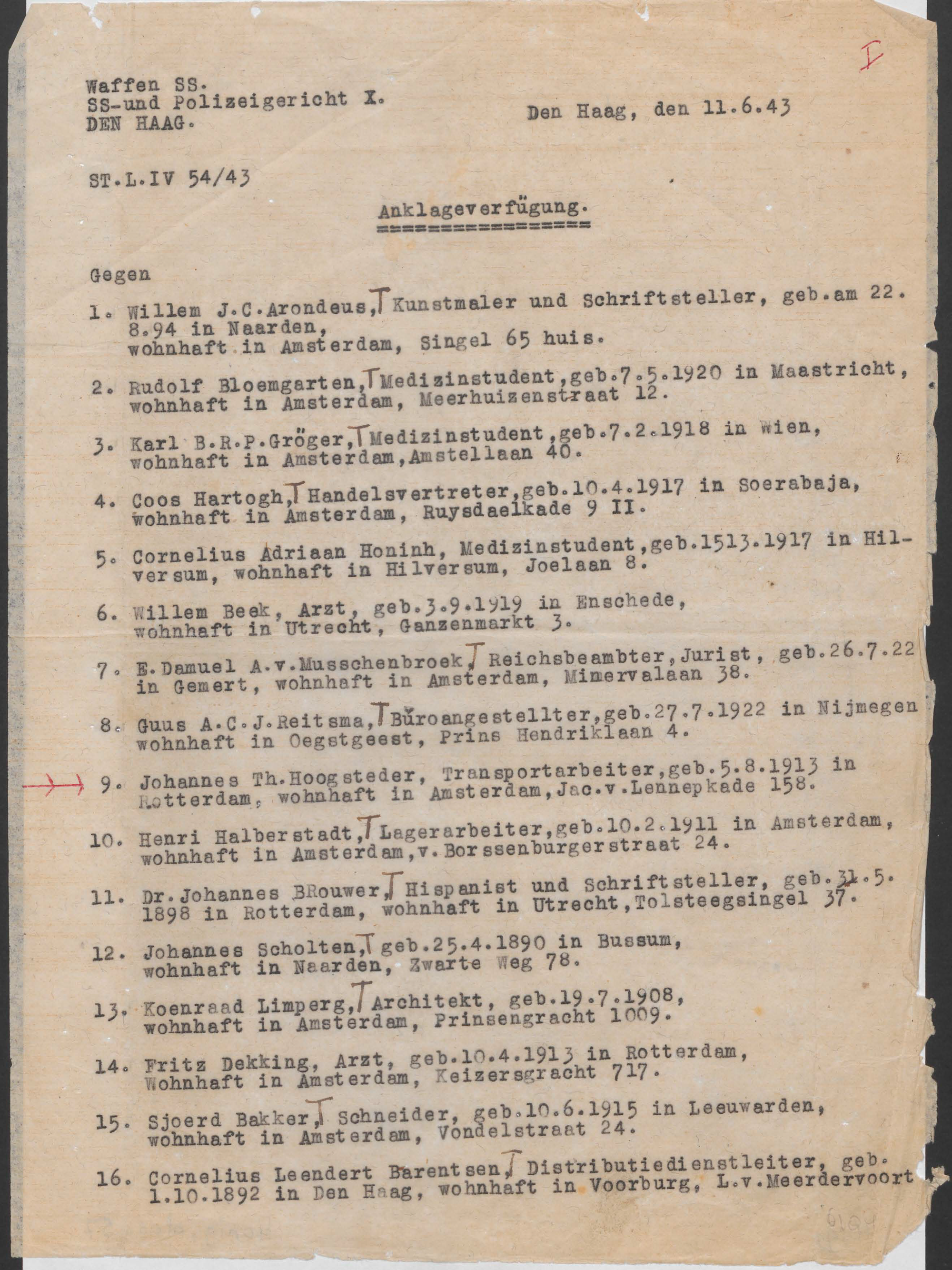
The trial of Arondéus and the others was held in the Kolonnial Instituut in Amsterdam, a place chosen for its spectacle. In all there were 26 charged in the attack, but the verdicts were foregone conclusions from the moment they were arrested. That there was a trial at all was unusual. Arondéus and the twelve men who participated in the attack were sentenced to death, the others, found to have provided support and planning, received an array of prison sentences and deportation to work camps. The trial was meant to send a message that the Reich swiftly and decisively dealt with a violent uprising, and would do so again if anyone was inspired to follow their lead.
In his book, Van Dantzig also mentioned Arondéus famous last words. They were communicated by Lau Marizel, his lawyer and one of the last people outside the Nazi regime to see him alive. She visited him with one of his close friends, the morning of his execution. Marizel, via Van Dantzig:
Tiky was exceptionally cheerful; he had red blotches on his cheeks; his excitement was almost frantic. He gave us messages from others for people outside, and once again, he made us promise to let people know after the war that homosexuals didn't have to be less brave than other people. We had the impression that Tiky was truly happy then.
This message a little more nuanced than what we typically see in English sources about his final words, and here it’s delivered third-hand. But taken as a whole, in all the ways it’s been reported, we can see a consensus form — the overarching message is the same, in either English or Dutch. Willem was proud of who he was, a courageous man who fought the Nazis in defense of himself and others, and he wanted other gay men and women just like him to know that they could do the same, that they too could be courageous and that they too could someday find the same pride in themselves.
It’s all very easy to misread: death as light, beautiful and wise; the “joyeux et indifferent” tone, the almost mischievous courtroom self-assurance, the cheerfulness before facing a firing squad. But we shouldn’t take Arondéus lightness here as denial but liberation from coercion. Likewise his message about courage shouldn’t be read simply as gay people can be as brave as straight people, but rather don’t let them conscript us with a label of cowardice because of who we are. If that’s not the epitome of pride, I don’t know what is.
Months after I first received Van Dantzig’s book, I stumbled across another listing mentioning Arondéus at a rare bookstore in Oregon in the United States. It claimed to be a lot of war-era items from Amsterdam: pictures, news clippings, a rare copy of De Frije Kunstenaar (The Free Artist), a resistance newspaper that Willem contributed to, and — most interestingly to me — an apparent letter he’d sent from prison. I’d seen one other original like this one in the Amsterdam Resistance Museum. The stationary was a match, but I couldn’t make out the handwriting in the images online to know what it said. I also couldn’t imagine how any of it had gotten to Oregon, but I wanted to see it all for myself so I bought the entire lot.
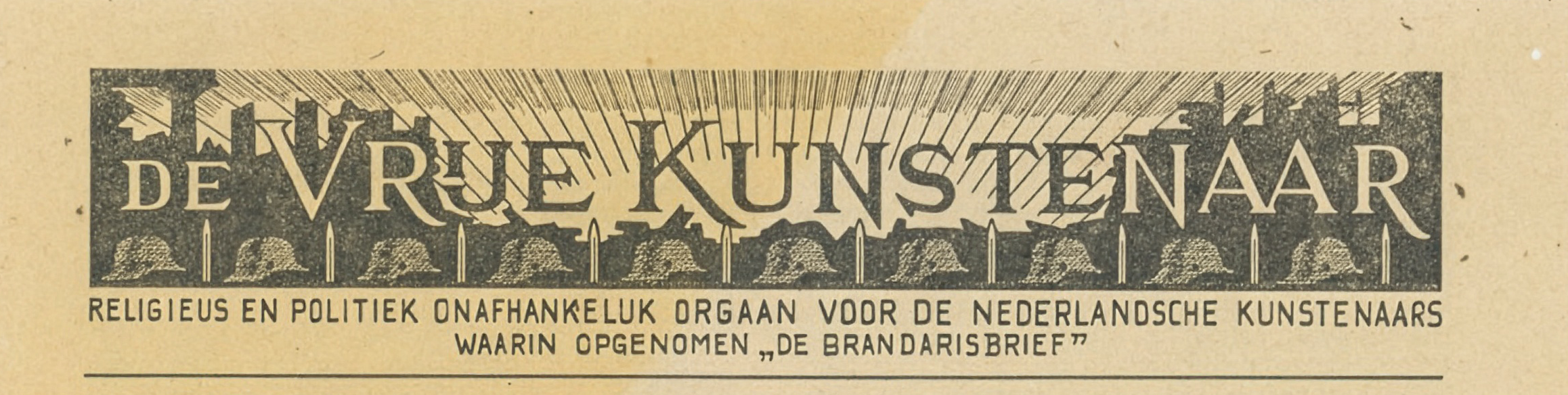
When the package arrived, dawning cotton gloves and exercising the utmost care, I began to unwrap what I’d found. The edition of De Frije Kunstenaar was the very same edition that announced Willem’s execution; the letter was the very one Willem had written to his friend Eep, the one Van Dantzig had apparently seen and quoted in his book, and the very one that had caught my attention months earlier.
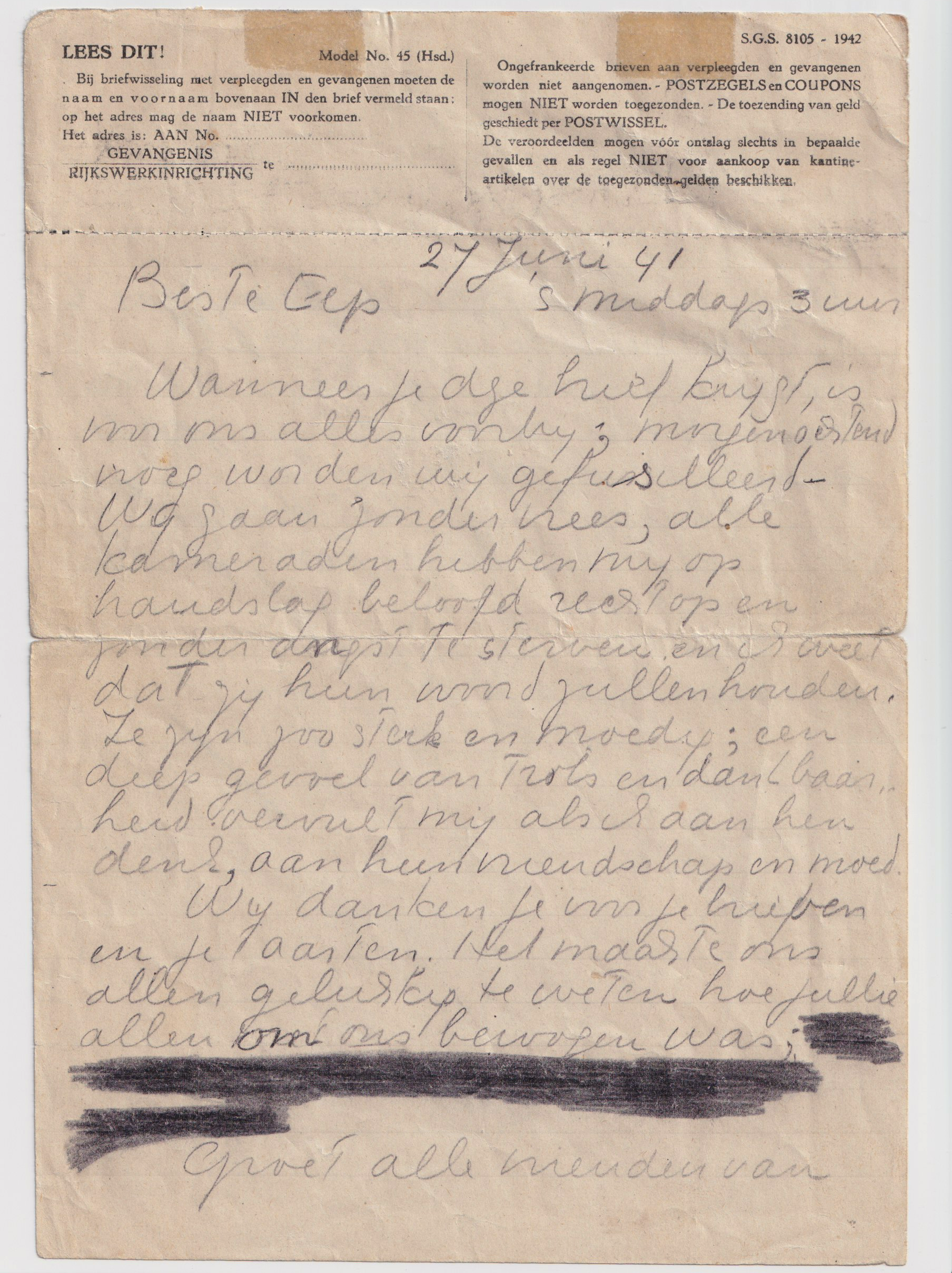
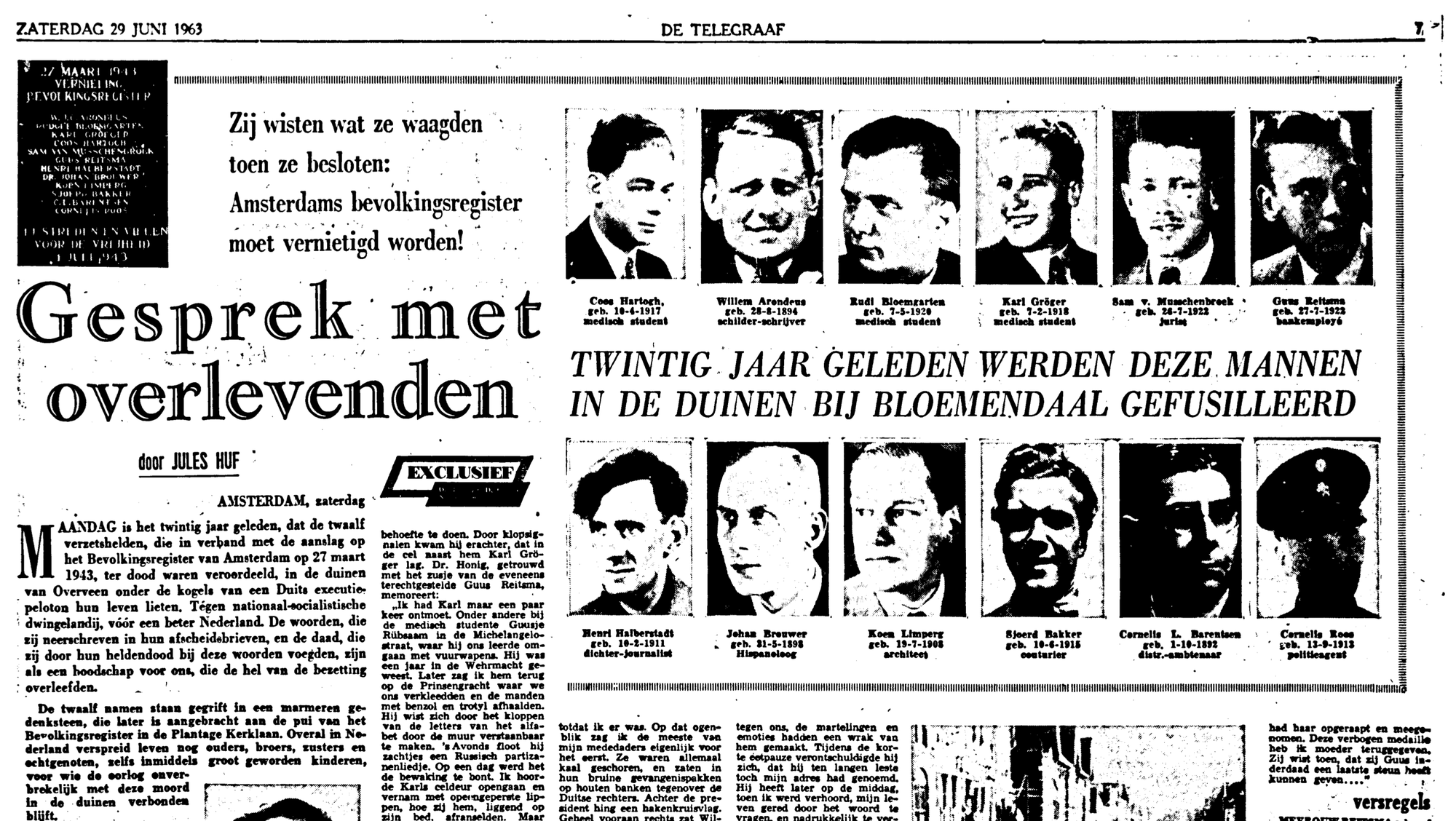
A part of the letter is scratched out, either by Willem (perhaps he was not given an eraser) or by German censors who didn’t like what he had to say. It was no small irregularity that he was allowed to even write letters, but by many accounts Willem’s German captors were nothing if not impressed with his fortitude. He and his co-defendants, awaiting execution, were given not just paper and pencils but unprecedented freedom in the weeks after their trial. They were allowed to move freely through adjoining cells, to laugh, to sing, to read to each other from the Bible. Flowers in the colors of a Dutch flag even adorned a table in the middle cell block. Pannekoek and others wrote that Willem was the moral compass of the group, the steady rock that helped them face what was coming. Two co-defendants called him a “lichtend voorbeeld” – a shining example) — in their accounts of the weeks in prison published 20 years later in De Telegraaf.
I gave all the documents in the collection, including the letter, to the Resistance Museum in Amsterdam. It felt only right that the items be returned to the Netherlands, under the care of those that can keep them safe for another 75 years. A letter like this is how pride can be carried forward through fragments, through a voice that refused silence, through the strange way an entire life and death can nearly vanish from history but reappear in small part in your hands decades later. I wanted that to be preserved.
Pride is often sold as a kind of victory—an arc we’re taught to expect once you find the courage to claim space, to insist on your right to exist. But Arondéus’ story isn’t a story of victory. On July 3, 1943, before dawn, Willem and the other prisoners were loaded into vans, taken to the dunes at Overveen, and shot by a firing squad. Despite his peace, despite the lessons he left behind, this is not a happy ending. This isn’t a triumph. But it is dignity under pressure: the lightness of a man who, having chosen truth over fear, cannot, even a near-century on, be made smaller by being murdered.
While tactically the attack was a success, strategically it was less so. Some estimated 18,000 identity cards were damaged, but most were not and the building itself was rebuilt within a few months. Many of the records destroyed had duplicates in a central facility in The Hague. But if you look at the Dutch response, it was galvanizing both to the Dutch resistance and the Dutch people at large.
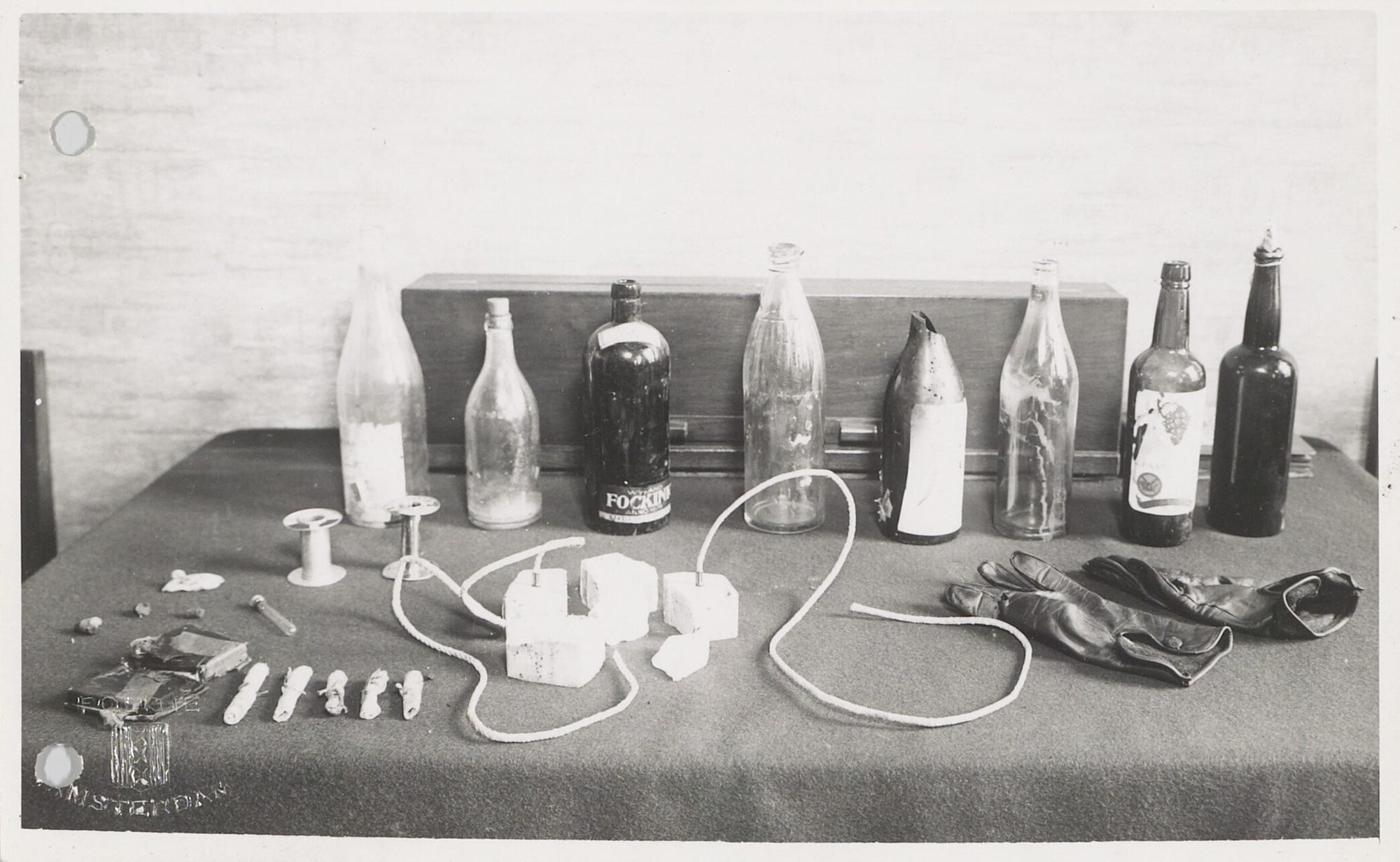
After the war, when the Netherlands was liberated, Willem’s friends were able to find his body—and the others’—thanks in large part to Sjoerd Bakker, the tailor who made their police uniform disguises and, somewhere along the way, seems to have absorbed something of Willem’s steadiness. Willem had asked for cake as his final wish, and his friends on the outside scrounged enough butter and flour and sugar to make it happen. It was delivered to the prison and shared among the entire group (the thanks for the cakes reference in Van Dantzig’s book). Sjoerd, though, asked to be executed in his favorite pink shirt, a vivid insistence on his own individuality.
Among the many dead found at Overveen, the shirt later stood out even though the bodies had decomposed, leading their friends to find them. They were eventually reinterred — along with the remains of nearly 400 others found at Overveen — in Bloemendaal Erebegraafplaats in Zuid-Kennemerland National Park, the Dutch Honorary Cemetery Bloemendaal for executed resistance fighters. The cemetery was declared a National Monument in 2010, and forty-five markers were placed in the dunes to mark the original burial sites.
In 1986, Arondéus was named Righteous Among the Nations by Yad Vashem, an honor that I’m certain would’ve made him quite proud.

The Science at the End of the Rainbow

Charlie Chaplin once said you’ll never find a rainbow if you’re looking down. Unfortunately, we’re also here to tell you that you’ll never find the end of one either, no matter how many leprechauns you chase. We also want you to know that you should not chase leprechauns. Waterfalls, maybe. We’re getting off track. Back to the topic. The science of rainbows, and more specifically, light.
Rainbows are made from sunlight, and though sunlight looks to be white, that’s not the whole story. Sunlight is a mixture of the entire visible spectrum, from red to violet (and then some; file that away for later), each at a different wavelength. When they come together, they look to us as what we describe as white.
In a vacuum, light moves at a constant speed. But in the air — full of water and other particles — it slows down depending on what it’s moving through and what its wavelength is. Different colors slow down at different rates. Violet slows more than red, for example. It’s this difference that causes the colors in white light to deviate at slightly different angles. This is dispersion, the separation of light into its constituent colors, and it is the engine behind every rainbow.
The next important component is a raindrop. When light enters a raindrop, it bends at the surface, reflects off the inner back wall, then bends again on its way out. It’s those two bends — one in, one out — that do the color-separating work. The middle reflection just sends the light back toward you. The geometry of that path concentrates the outgoing light at a specific angle: roughly 42 degrees from the direction directly opposite the sun. This is called the antisolar point, the point directly opposite the sun from your perspective. All rainbow geometry is measured from this point.
Shorter light wavelengths exit raindrops at slightly different angles than longer ones — violet near 40 degrees, red near 42. Spread that across millions of droplets at different positions in the sky in front of a person viewing it from their unique antisolar point, and you get a band of mesmerizing, separated colors.
This is also why you can never walk to a rainbow. The arc you see is defined entirely by your own line of sight relative to the sun. Every observer stands at the center of their own rainbow. Two people standing side by side are technically seeing different optical phenomena, assembled from different sets of light and rain droplets.
But why is the shape an arc? Because the antisolar point is a point, and all the droplets sitting at 42 degrees from that point form a circle around it. What you see as a rainbow is a slice of that circle that’s above the horizon. If you were in an aircraft with rain below you and the sun behind you, you could see a full circular rainbow.
So those are the basics. But the next time a rainbow chooses to grace you with its astounding presence, we want you to take a really close look. Focus carefully just inside the primary rainbow’s violet band, and you may catch pale, closely spaced arcs of pink and green called supernumerary bows. These are unusual. Supernumerary bows aren’t explained by geometric optics, which describes light as rays. Instead, they are an interference effect—created when light waves overlap and combine—similar to the wave behavior that creates the iridescent colors in soap bubbles.
As we’ve already talked about, light travels as a wave (it also travels as a particle, because light is freaking weird). And by chance, any two or more light rays entering a water droplet, even at slightly different spots (their path length), can still exit the drop at the same angle. When they do, their waves interfere.
If the difference between the path lengths is a whole number of wavelengths, the light rays reinforce each other. This is called constructive interference, and it produces a bright band. If it is a half wavelength, the light rays cancel out (this is called destructive interference, producing a dark band). Fringe spacing (the distance between colored or dark lines) also depends on raindrop size. Supernumerary bows are clearest when raindrops are all close to the same size—common in light drizzle, but rare in heavy rain where droplet sizes vary widely. In that case, the colored fringes usually wash out.
Sometimes you also get fabulously lucky, and you don’t just see a rainbow, you see a double rainbow, reversed. When visible, it appears outside the primary bow at about 51 degrees and forms because light inside the raindrops has bounced twice instead of once. That extra bounce also flips the color order — so while the primary rainbow runs red on the outside and violet on the inside, the secondary runs violet on the outside and red on the inside. The second bow is also noticeably dimmer, because each reflection loses some light.
The region between the two rainbows — called Alexander’s dark band after Alexander of Aphrodisias, who first described it in the second century — is darker than the sky on either side because no rainbow-scattered light from either reflection reaches your eye from those droplets.

We’d be lying if we said the fact that there is no end of the rainbow isn’t a giant disappointment. You might call us fascinated with this particular amalgamation of physics and light, and you’d be right. Obsessive is a word that you could probably use, too. But hey, we are not the only ones, obviously. Rainbows have fascinated humans from the dawn of civilization, and the science and the stories we tell about them are inextricably intertwined.
Think about it. Even cultures without telescopes, wave equations, or knowledge of refractive indices noticed the same mysterious qualities about rainbows that we recognize today: you can never reach one, it appears and vanishes unexpectedly, and it bridges two worlds—the storm and the clearing, the sky and the earth. For example, there’s the Rainbow Serpent of Aboriginal Australian tradition, one of the oldest continuous religious traditions on earth, living in the water and moving through the sky. The Norse Bifröst burns with fire and leads to Asgard and the Nine Realms. Iris, the Greek messenger, travels the rainbow’s length between mortal and divine. Every culture that looked up saw something that behaved unlike anything else in the universe, and they were right to be awed. What strikes here at Galaxy Q is how many of the stories map onto genuine physical strangeness. The rainbow that retreats as you approach it — personal, unreachable, assembled fresh for each observer — really is a phenomenon without a fixed location. The idea that it belongs to two realms reflects the actual optics: you need both sun and rain simultaneously, in precise geometric relationship to where you are standing. The sense that it is alive, dynamic, fleetingly present — that is accurate too. A rainbow is not a thing. It is an event.
The most human detail in all of it is the pot of gold—a treasure at the end you can see but never reach. What is that, if not a remarkably apt metaphor for the nature of inquiry and discovery itself? Yet the rainbow did not yield its secrets easily. Descartes worked out the geometry in 1637, centuries after Alexander described the band, and the explanation of wave interference behind supernumerary bows came even later. The full quantum mechanical account of why water disperses different wavelengths differently goes deeper still. We haven’t even touched on the fact that light is both a wave and a particle. With every layer of explanation, another appears. The end of the rainbow keeps moving—and we definitely haven’t reached it.
The Arcade
Things we love.
The Queer Agenda

If your game nights need a serious upgrade, and who’s doesn’t, The Queer Agenda delivers 350 cards packed with questions, dares, and the kind of inside humor that only lands when you're among your people. Built specifically around LGBTQ+ experiences and sensibilities, it's guaranteed to get loud and funny.
Buy
Pride Month Greeting Cards (Lovepop)

These aren't your average greeting cards; Lovepop is known for their intricate, sculptural pop-up designs, and the Pride line brings that same wow factor to LGBTQ+ celebrations. Send one to a friend, a partner, or anyone in your life who deserves something a little more spectacular than a straight (we’re sorry) piece of cardstock. You can even personalize with a photo or message and have it sent directly to the recipient — which would make you genuinely thoughtful. Go you!
Buy
The Book of Pride
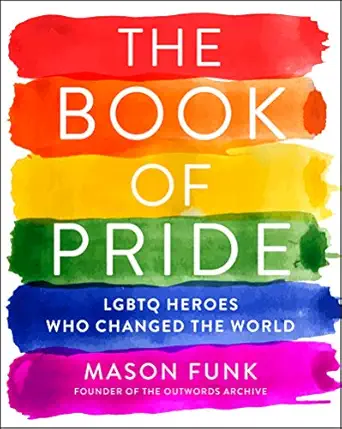
The Book of Pride by Mason Funk brings together 75 mini-biographies of the activists, leaders, and ordinary people who built the gay rights movement from the 1960s to the present. Organized into ten thematic sections — Liberation, Survival, Truth to Power, and more — it's less a linear history than a chorus of voices, many of them lesser-known but no less essential. A worthy addition to any bookshelf.
Buy
Polari
In 1967, Round the Horne was the most popular radio show in Britain — fifteen million listeners every Sunday afternoon, BBC, family hour. Every episode featured two characters, Julian and Sandy, who spoke in something called Polari, a secret language developed by gay men in Britain over decades as a way of talking openly in public without being understood — or arrested. Sandy would greet Kenneth Horne with "How bona to vada your dolly old eek again." Julian would tell him to "vada that great butch lucoddy." They would mention, casually, that they had "a criminal practice," that their "fides were absolutely bona," that Julian had met someone "in a cottage."
The censors didn't get it. The straight audience didn't get it. But gay men across Britain, listening in their living rooms, absolutely did.
Here’s our much lesser attempt at Round the Horne conversation. Can you translate what Julian and Sandy were actually saying to fifteen million oblivious people on a Sunday afternoon in 1967? We have faith in you.
SANDY: Hallo, Mr. Horne! Bona to vada your dolly old eke!
HORNE: And you too, Sandy. What are you two up to these days?
JULIAN: Oh, we've been trolling down by the docks, haven't we Sand'. Vada'd this absolutely bona omi — riah like you wouldn't believe, fantabulosa lallies—
SANDY: Bold as you like, he was. TBH, if you know what I mean.
JULIAN: We ended up in the most bijou little cottage ajax the market. HORNE: How... charming.
We’ll have a glossary for you in the next edition of Galaxy Q.
 COSMIC